








Painting with Pastels

"Colour is my day-long obsession, joy and torment."—Claude Oscar Monet
Pastel - Pigments mixed with gum and water, and pressed
into a dried stick. Works of art done with such pigments are also called
pastels.
A picture made with pastels may be called
either a drawing or a painting. The principal reason to call it one or
the other has nothing to do with whether it has ever been wet. It has
entirely to do with whether the resulting image is more linear or more
painterly -- showing shapes or forms created with patches of color,
exploiting color and tonal relationships.
I like working with pastels because they are immediate and
direct and no drying is required. There’s no brushes, knifes or other
tools of application to master. I use no tools! My hands and
fingers become my tools and are used for blending and softening colors;
the only thing between my brain and the final painting is my imagination
and the raw pigment between my fingers. This method of painting is
ideal for en plein air painting and also when your art studio has
limited space.
I paint mostly on artistic sandpaper, which
holds more layers of pigment than other types of pastel paper. I usually
begin by creating the darkest darks and the lightest lights and cover my
entire surface with my hardest pastels as an under painting. Then
I layer the next hardest on top of that, layer over layer, and finish
with the very softest pastels for detailing and highlighting. I
use little or no fixative, because fixative alters and darkens the
colors of the painting.
Most all of my Pastel Paintings are unprotected pastel surfaces.
Unprotected pastel, no fixative or sprays on surface. I don’t use
fixative or other protective sprays, because they distort the beautiful
rich and luminous colors that pastels offer. Pastel Paintings require
special shipping, handling and framing, to protect their very sensitive
surfaces. The surface can only come in contact with acid free materials
and there can be absolutely no movement between the materials and the
surface of the pastel painting.
With proper care Pastel paintings are very
permanent. They don't fade or lose their color over time. Art museums
have pastel paintings from as early as the 16th century, still in
perfect condition.
The art of pastel painting has been around
for hundreds of years. Even the great masters like Edgar Degas,
Claude Monet and Pablo Picasso worked in pastels, as shown by the pastel
examples below.
Examples are:
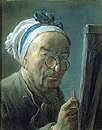
 Jean-Baptiste
Siméon Chardin (French, 1699-1779), Self-Portrait in Spectacles,
c. 1771, Rococo, pastel on blue-gray paper over canvas, 16 x 13 inches
(40.7 x 32.5 cm), Louvre.
Jean-Baptiste
Siméon Chardin (French, 1699-1779), Self-Portrait in Spectacles,
c. 1771, Rococo, pastel on blue-gray paper over canvas, 16 x 13 inches
(40.7 x 32.5 cm), Louvre.
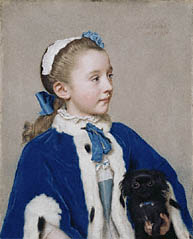
 Jean-Étienne
Liotard (Swiss, 1702-1789), Portrait of Maria Frederike van
Reede-Athlone at Seven Years of Age, 1755-1756, pastel on vellum, 22
1/2 x 18 1/2 inches (57.2 x 47 cm), J. Paul Getty Museum, Malibu, CA.
Jean-Étienne
Liotard (Swiss, 1702-1789), Portrait of Maria Frederike van
Reede-Athlone at Seven Years of Age, 1755-1756, pastel on vellum, 22
1/2 x 18 1/2 inches (57.2 x 47 cm), J. Paul Getty Museum, Malibu, CA.
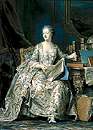
Maurice
Quentin de La Tour (French, 1704-1788), The Marquise de Pompadour,1752-1755,
pastel on blue-gray paper, 70 x 51 1/2 inches (177.5 x 131 cm), Louvre.
See Rococo.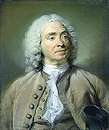
Jean-Baptiste
Perronneau (French, 1715-1783), Portrait of Gabriel Huquier,
engraver (1695-1772), 1747, pastel on blue paper mounted on canvas,
0.630 x 0.530 m, Louvre.

John
Singleton Copley (American, 1738-1815), Hugh Hall, 1758, pastel
on paper mounted on canvas, 15 1/2 x 13 inches (39.4 x 33 cm),
Metropolitan Museum of Art, NY.
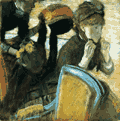
Edgar
Degas, At the Milliner's, c. 1882, pastel on paper, 27 5/8 x 27
3/4 inches, (70.2 x 70.5 cm), Museum of Modern Art, NY.
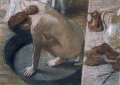
Edgar
Degas, The Tub, 1886, pastel, 23 1/2 x 32 3/4 inches (60 x 83
cm), Musée d'Orsay, Paris. See asymmetry.
 Edgar
Degas, Dancers, c. 1896, pastel on paper, Cleveland Museum of
Art.
Edgar
Degas, Dancers, c. 1896, pastel on paper, Cleveland Museum of
Art.
|
|
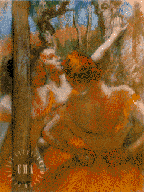
Edgar
Degas, Three Ballet Dancers, One with Dark Crimson Waist, 1899,
[170 k,] pastel on paper, 23 1/4 x 19 1/4 inches, Barnes Foundation
.
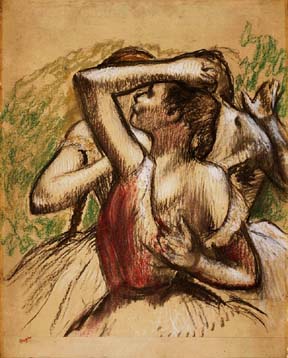

Odilon
Redon (French, 1840-1916), Madame Arthur Fontaine (Marie Escudier),
1901, pastel on paper, 28 1/2 x 22 1/2 inches (72.4 x 57.2 cm),
Metropolitan Museum of Art, NY. See Symbolism.
Berthe Morisot (French, 1841-1895), A Village (the village of
Maurecourt), pastel on paper, 18 1/2 x 28 1/4 inches, private
collection, New York
.
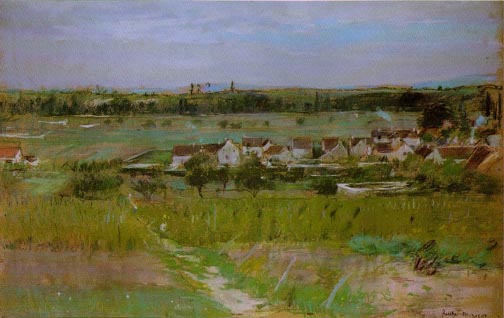
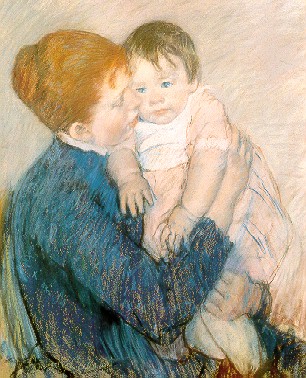
Mary
Cassatt (American, 1845-1926), Agatha and Her Child, 1891, pastel
on paper, 26 x 21 inches (66.1 x 53.3 cm), Butler Institute of American
Art,Youngstown, OH. See American Impressionism.
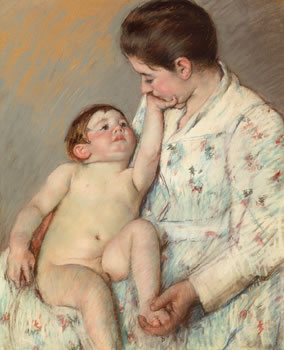
Mary
Cassatt, Baby's First Caress, 1891, pastel on paper, New Britain
Museum of Art, CT.
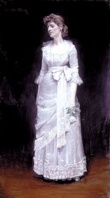
William
Merritt Chase (American, 1849-1916),
The White Rose,
c. 1886, pastel on paper on canvas, Phoenix Art Museum, AZ. See Ten
American Painters.
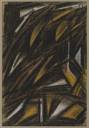
Natalya
S. Goncharova (Russian, 1881-1962), Rayonist Composition, c.
1912-3, pastel on paper, 31.8 x 21.6 cm, Tate Gallery, London. See
Rayonism.
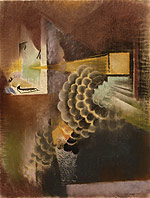
Max
Weber (American, born Russia, 1881-1961), Slide Lecture at the
Metropolitan Museum, 1916, pastel on paper, 24 1/2 x 18 3/4 inches
(62.2 x 47.5 cm), Metropolitan Museum of Art, NY.
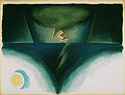
Georgia
O'Keeffe (American, 1887-1986), A Storm, 1922, pastel on paper,
mounted on illustration board, 18 1/4 x 24 3/8 inches (46.4 x 61.9 cm),
Metropolitan Museum of Art, NY.
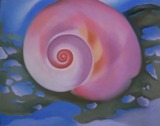
Georgia
O'Keefe, Pink Shell with Seaweed, c. 1937, 22 x 28 inches, pastel
on paper, San Diego Museum of Art, CA. See enlargement, nature, and
volute.
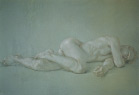
Paul
Cadmus (1904-1999), Male Nude, c. 1960s, pastel on paper, 14 x 23
3/4 inches, Kemper Museum of Contemporary Art & Design, Kansas City, MO.
See nude.
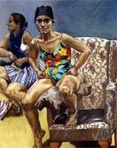
Paula
Rego (Portuguese, lives and works in England, 1935-), Recreation,
1996, pastel on paper mounted on aluminum, 66 7/8 x 51 1/4 inches,
Kemper Museum of Contemporary Art, Kansas City, MO.
Web Design by: Felix A. (Tony) Grigsby ~ The Traveling Artist ~ Copyright © All rights reserved ~ Revised: .

the.artist.tony@gmail. com